
Catalytic media · no regenerant
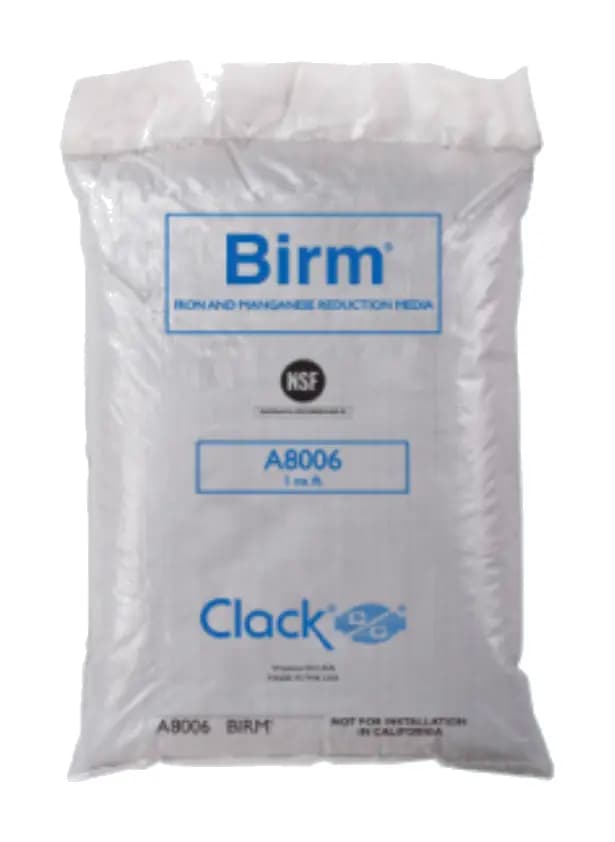
Birm
Filter media for iron and manganese removal — catalytic media
Manufacturer: Clack
Clack Birm® is an efficient and economical filter media for the reduction of dissolved iron and manganese in water, for gravity-fed and pressurised systems. Birm is an insoluble catalyst: it speeds up the oxidation of dissolved iron (Fe²⁺ to Fe³⁺) by the oxygen in the water, and the resulting ferric hydroxide precipitates and stays in the filter, from where it is removed by backwashing. Birm is not consumed and needs no chemicals for regeneration, so it costs less than many other iron removal methods. It is used for manganese with the same dependability.
Price and delivery time on request. Working hours: Mon–Fri, 8:30–17:00
Features
What Birm offers
- No chemicals or regenerant under the proper conditions
- Extremely high iron removal efficiency
- Only periodic backwashing required
- Long life with low attrition loss
- Wide temperature range
- Light material, 36–38 lbs/cu.ft
- Certified to NSF/ANSI/CAN 61
- Made in the USA
Applications
Where it is used
- Iron removal
- Manganese removal
- Borehole and well water
- Gravity-fed filters
- Pressure filters
Technical data
Birm specifications
Physical properties
- Colour
- Black
- Bulk density
- 36–38 lbs/cu.ft (≈ 580–610 kg/m³)
- Effective size
- 0.48 mm
- Uniformity coefficient
- 2.7
- Mesh size
- 12 × 50 mesh
- Specific gravity
- 2.0 g/cm³
Operating conditions
- Bed depth
- 24–36 in (≈ 0.6–0.9 m)
- Bed depth in multibed filters
- 10–18 in (≈ 25–46 cm)
- Freeboard
- 50% of bed depth min.
- Working flow rate
- 5 gpm/sq.ft (≈ 12 m/h) or higher depending on local conditions
- Backwash flow rate
- 12–18 gpm/sq.ft (≈ 29–44 m/h)
- Backwash bed expansion
- 20–40% of bed depth
- Rinse flow rate
- same as the service flow rate
- Max. pressure drop
- 2–4 psi (14–28 kPa) increase from clean bed
- Water temperature
- 35–100 °F (≈ 2–38 °C)
Water requirements
- pH for iron removal
- 6.8–9.0
- pH for manganese removal
- 8.0–9.0, below 8.5 if iron is also present
- Dissolved oxygen
- at least 15% of the iron and 29% of the manganese content
- Alkalinity
- more than twice the combined sulphate and chloride
- Free chlorine
- below 0.5 ppm
- Hydrogen sulphide
- remove before Birm
- Oil
- none present
- Polyphosphates
- none present
- Organic matter
- up to 4–5 ppm (TOC below 5 ppm)
Certification and origin
- Certification
- NSF/ANSI/CAN 61
- Origin
- USA
- If the pH is below 6.8, a neutralising media (Clack Corosex®, calcite) or soda ash dosing goes before the Birm filter to raise the pH. Water with low dissolved oxygen is aerated first.
- At too high a pH, iron can form colloids that are very difficult to filter out.
- Chlorination greatly reduces Birm's activity, and high chlorine concentrations may deplete the catalytic coating. Polyphosphates coat the granules and reduce their effect. Any chemical added to the feed or backwash water should first be tested for compatibility with Birm.
- Raw and treated water should be checked periodically. Elevated manganese in the treated water means the media is breaking down or the bed capacity has been exceeded. If there is no chlorine or hydrogen sulphide in the water, low pH or lack of oxygen are the most likely causes of media breakdown.
Accessories
More models in this category
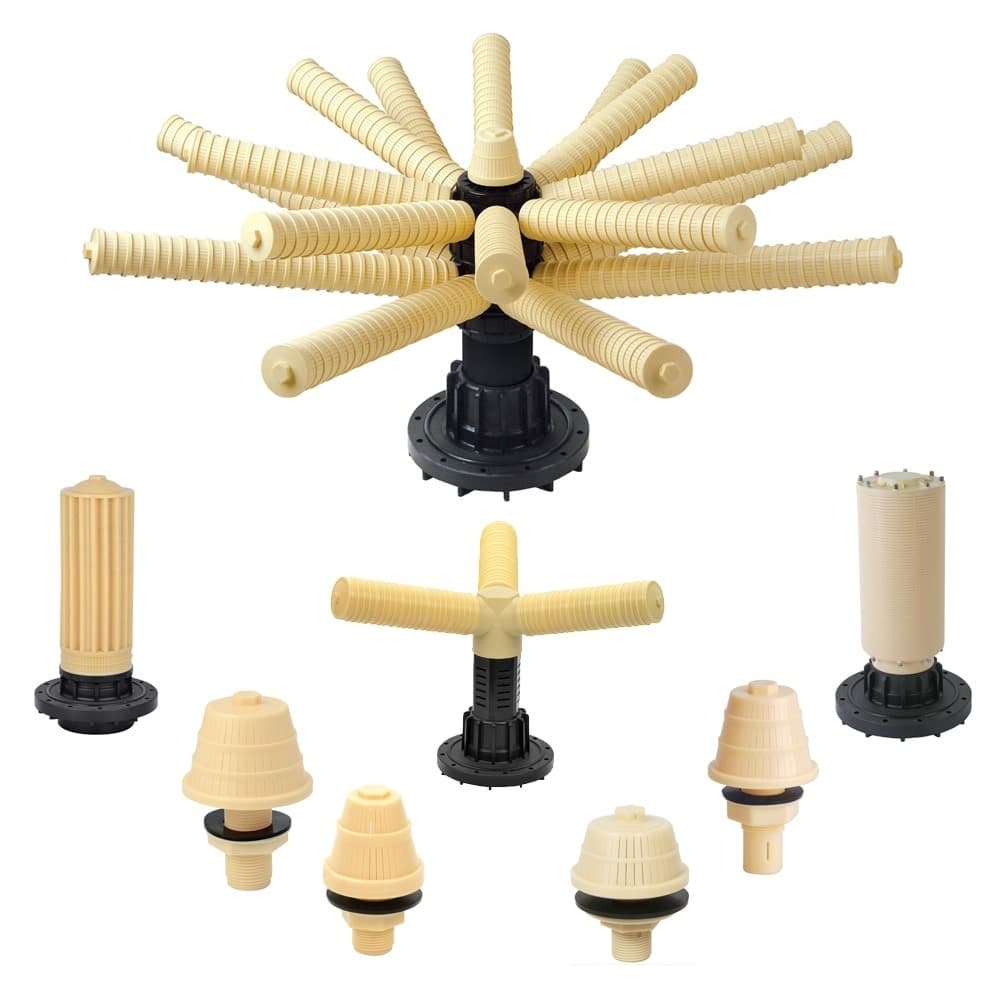 Euro-ClearDistributorsDistributors for softeners and filter columns — tentacle and filter basket types
 Pure ResinPMB101Mixed bed ion exchange resin — gel cation and Type I anion resin
 Pure ResinPA101Ion exchange resin, strong base anion — Type I, gel
- Pure ResinPA202Ion exchange resin for nitrate removal — macroporous anion
Enquiry about Birm
Tell us about the site and we will confirm the model, the price and the delivery time. Installation and service are done by our own teams.
- Phone0886 834 7170888 654 040
- Emailoffice@hydrocraft.bg
- Working hoursMon–Fri, 8:30–17:00
- OfficeSofia, Orlandovtsi, 1 Mara Buneva St.